
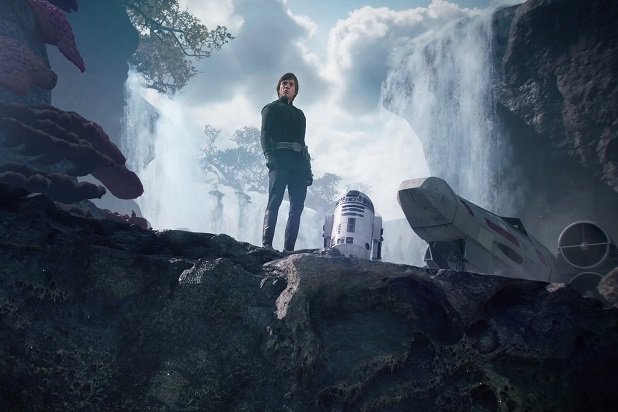
A long time ago, in a console war far, far away… It is a period of great gaming, young Kat turns on her Playstation 2, and won her first victory against the ‘easy’ mode in Guitar Hero 2. During her battle, she managed to rack up points via the game’s ultimate weapon, the “star power“, a technique with enough boost to help you unlock awesome outfits for your characters. Pursued by nostalgia, Kat races home to her internet, looking up the Playstation 4 Guitar Hero Live game, and restore the gaming experience she once had….
…until she found out that she would have to use real money to unlock practically anything in the game, including tokens to play songs! I came to a predicament: do I want to buy the newest installment of my childhood guitar/ band games? They were expensive back in the day, being that you had to buy the game AND the instruments. But now, with Guitar Hero Live, I would have to buy the game, the instruments, AND cool in-game content. For me, It isn’t worth it. Microtransactions have made me weary about purchasing my old- time franchise favorites in modern times.
At first, microtransactions seemed great on phone games, where it would get you extra moves, lives, and in-game trinkets to make the levels easier, but that’s because the game was initially free- they needed to make their money somehow. But, is it still worth it for a AAA-titled console game that already ranges from $60-$80? This seemed to be a huge turn-off for people testing the beta version of Star Wars Battlefront 2 (Note: the $80 reflects the deluxe edition).
In the past, you would feel a sense of pride and accomplishment from playing hard, racking up points, and spending them on awesome, in-game prizes. But, by introducing micro-transactions and the “pay to play/ pay to win” attitude, EA and Star Wars: Battlefront 2 had successfully ruined their fans’ gaming experience and trust through their microtransaction fiasco.
History
It’s a long and somewhat- complicated road that EA has taken with this new game. However, Gita Jackson from Kotaku guides us through every step of this controversy in her article, “A Guide to the Endless, Confusing Star Wars Battlefront II Controversy“.
On August 4th, EA released information that the game Middle-Earth: Shadow of War will contain a loot box system that can be obtained through in-game points or real money. These loot boxes would feature not only cosmetic upgrades, but also “experience points boosts and better gear.” Fans of the game were displeased with this system.
In September, despite the negative majority opinion surrounding the loot boxes, EA released other games that featured this system, including NBA 2K18 and Destiny 2, in speculation that Star Wars: Battlefront 2 would receive this this as well.
October 10th is where it all went down, with the release of Star Wars: Battlefront 2 Beta. Fans noticed the return of the Star Cards system, but this time, they came in loot boxes. In a video by Game Spot, they explain that the Star Card system, “Offers class and hero-focused amplifiers that increase stats and grant new abilities for progression in online modes.”, adding that, “It’s now a required part of long-term player growth.”, thus putting the “pay to win” idea into repetition.
They go further to explain what Star Cards are, stating that they help aid added increase to damage, health regeneration, and attaining other skills. On top of that, there are four different types of Star Cards, each varying in quality, like modern-day currency. You have “Common”, “Uncommon”, “Rare”, and “Epic”, with increasing stats for higher ranks. These are vital for increasing the level of the character. You can attain them in the game, but you will be rewarded with randomized loot boxes, where you could receive Star Cards through. However, it may call for dedicated amounts of time playing, depending on how much you’re awarded with each time. This makes hard work and luck a “necessary aspect of the Battlefront 2 experience”. This system encouraged players to buy loot crates just to advance in the game. Another concern for the Beta was that the “Epic” leveled Star Cards were available through the purchase of loot crates, making it feasible for players to reach a high rank early in the game, becoming OP’ed (over-powered).
(Game Spot video: https://www.gamespot.com/videos/embed/6441968/?t=1m17s )
Two days later on October 12th, EA noticed the backlash and voiced their revoking of their “epic tier” Star Cards. On Halloween, they implemented changes in their system, so that players can craft their own “epic” cards. (Now, the only other way to obtain these “Epic” cards besides crafting them is if you have bought the pre-order or deluxe edition of the game).
On November 11th, they released a playable pre-release trial period only for EA Access subscribers. Gita adds, “Now that the game’s currency system has been revealed, fans have some problems with it.”, noting that the two main currencies in the game, credits and crystals, can not only be obtained by in-game play, but can also be bought.
The next day, players voiced their displeasure regarding unlocking characters. To unlock them, you’d have to use your credits. But as Gita points out, it costs 60,000 credits to unlock Luke Skywalker, one of the franchise’s main characters.
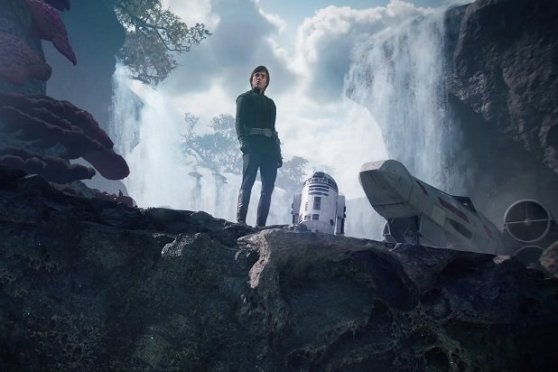
Character Luke Skywalker shown next to R2-D2 in a cut-scene from Star Wars: Battlefront 2.
On November 13th, they ended up lowering the cost of unlocking heroes, making an overall game price adjustment. Luke’s price went down to costing 15,000 credits. However, the amount of credits earned during the single player campaign reduced too.
Lastly, on November 17th, just hours before the game was released, EA temporarily removed microtransactions from the game, including the ability to buy crystals, which were used to buy loot boxes. An article from The Wall Street Journal explained that the reason why this resulted was because James Pitaro, head of Disney Interactive Media and Consumer Reports, voiced his displeasure about the controversy (Note: Disney owns the Star Wars franchise, and they have significant leverage on the Battlefront games). As of the time of this article, there has been no talk of implementing microtransactions again.
Although the game is out now and loyal Star Wars fans are playing them, many can’t help but to remember EA’s greedy attempts at sucking in cash via microtransactions. Ultimately, EA ended up paying billions for it.
EA’s Stock Decline
After the Beta controversy, Erik Kain, a Forbes Magazine contributor, observed that EA’s “share prices have fallen 8.5% month-to-date, wiping out $3.1 billion in shareholder value in the process.” To be fair, Erik also points out that although shares declined before the launch, Battlefront 2 contributes to a more “gloomier forecast.” EA loyalists and stock holders have voiced their discontent by selling their stocks, but compared to their shares in the past, their stock prices have never been higher at $110 per share.
Michael Pachter, analyst for Wedbush Securities (focuses on the video game industry), draws comparisons to to EA’s other games and microtransactions by stating, “In FIFA, the single-player game allows access to all players, and only the Ultimate Team Multiplayer mode requires card collection.” He goes on to say, “The same is true of the [Grand theft Auto 5] vs. GTA Online, with the former having all content available and the latter (multiplayer) creating items for MTX purchases.” (Note: MTX also stands for microtransactions).
EA’s Reaction and Defense
During the negative buzz around the Beta failure, EA’s CFO (Chief Financial Officer), Blake Jorgensen responded to the situation at the 37th NASDAQ Investor Conference by saying that as an organization, they have learned a lot from this experience and, “If we’re not learning, that means we’re failing in some way.” He adds that they’re trying to listen to their consumers in order to “decide what’s the best way to build great games.”
Later at the end of November, he addressed the microtransaction issue, and stated, “Some people have more money that time,” adding, “you want to always balance those two”. It seems like he’s blaming the customers’ financial situation for not liking the system, making the situation worse.
Infamously, the EA Community Team also took to Reddit regarding the seemingly unfair rate at which players would accumulate currency in the game (besides buying it, of course). They spoke about their efforts to change the game by stating that they, “will continue to make changes and monitor community feedback and update everyone as soon and as often as we can.” However, the Reddit community wasn’t buying their “we’re changing and we really care about you” attitude. This post single-hanedly received 673,000 down-votes, the most a post has ever got on the Reddit platform. Fans felt used, and many of them were not going to accept EA’s apology that quickly.
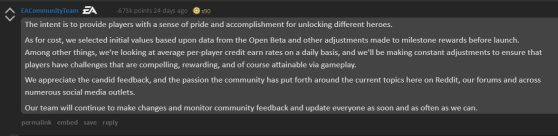
The full post of EA’s response to their Beta situation, receiving the most down-votes on Reddit history.
Legislation Movements
This controversy shook legislators worldwide. On November 22nd, the Belgian Gaming Commission and the Justice Minister voiced their decision on wanting the game banned from their country, accusing EA of promoting gambling. They also stated that microtransactions are milking and abusing the players out of money. Although they haven’t finalized their decision as of now, they did note on their news site RTFB (translated), that the, “mixture of money and addiction is a game of chance.”
However, they’re not the only ones who want change. Hawaiian state legislatures voiced on a YouTube video that the loot crate system was considered gambling because players had no idea exactly what they were getting when they purchased them. representative Chris Lee, who ironically stated, “It’s a trap!“, and that it’s “something we need to address to ensure that (particularly) kids who are underage who are not psychologically and emotionally mature enough to be able to gamble…are protected from being trapped into these cycles…” He went on to say address the possibility of future legislation to prohibit children from spending real money in games.
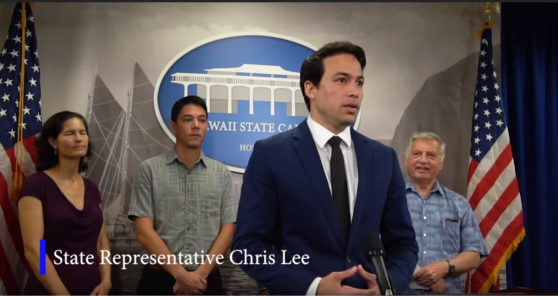
Chris Lee and others talk about possible legislation regarding video game gambling.
Aftermath
EA has definitely gone on a roller-coaster ride these past couple of months, and brought up some major concerns in the gaming community. However, Star Wars loyalists who can get past EA’s mistakes still play the game (its full version has yet to bring back buying mechanics). As someone who has a Star Wars nerd for a dad and a bunch of the Star Wars games for the Nintendo 64 and the Game Cube, I was initially excited for Star Wars games to come out on my newest console. Although EA has (most definitely) learned from their mistakes, I can’t get past the fact that they attempted to change Star Wars into a “pay to win” game. Honestly, unless EA backs off from implementing mobile game microtransactions onto their future AAA titles, I will be excluding myself from buying these titles. EA has broke the trust of many of their fans, myself included. This cannot be marked as a mistake on their part, but I am happy that they had the common sense to listen to their consumers and remove these mechanics from their Battlefront 2 installment. For now, I will just stick with one of my favorite games- SpongeBob SquarePants: Battle for Bikini Bottom.


 Wordpress by Kat Strysky